随着网络数据快速积累、网络思维深入人心,越来越多的科学研究、行业实践都开始从网络视角解决问题。网络科学是以复杂网络为研究对象的多学科交叉领域。而理解网络上的动力学机制,是实现对复杂网络预测和控制的基础,也是网络科学研究和应用的关键。
集智学园特邀陈关荣、项林英、樊瑛、宣琦、李翔、史定华、李聪、荣智海、周进、王琳等网络科学专家作为导师,依托汪小帆、李翔、陈关荣的经典教材《网络科学导论》,自2月27日起开展系列上线课程,以网络动力学为主线构建网络科学知识体系。欢迎希望进入网络科学领域、提高网络分析能力、与一线专家探讨问题的朋友报名参加!
5月29日(周六)晚 7 点 30 分,电子科技大学教授荣智海教授将为我们讲解网络博弈相关内容,欢迎对这一主题感兴趣的朋友,扫码预约。
在疫情和地震等灾难来临之际,人们紧密团结,共度难关。工蚁和工蜂放弃繁殖能力,分工协作,照顾同伴。合作行为在自然界和社会系统中随处可见,2005 年 Science 将“合作如何演化”列为需要解决的 25 个最重要科学问题之一。合作行为如何从理性个体间涌现出来?在网络系统中,如何学习周围邻居信息,帮助个体做出决策?网络的异质性、度相关性、聚类等重要结构特性又是如何影响合作演化的?动态网络中,个体如何择邻而居,网络结构又是如何演化的?
本次课程主要讲授教材第十章,内容包括:
基于经典的两人囚徒困境和雪堆博弈模型,介绍网络互惠中重要的策略演化规则,探讨规则、小世界和无标度等经典网络上的合作演化过程,揭示结构特征对策略演化的作用机理,介绍个体策略与网络结构之间的相互作用机理。
-
本次课程将在集智学园 B 站免费直播
-
付费学员在腾讯会议上课,可提问交流

扫描二维码,点击“我要听”预约,内附 B 站直播地址。(也可以在文末点击阅读全文报名)

电子科技大学教授/博士生导师,IEEE和Sigma Xi会员,中国自动化学会高级会员。长期从事复杂网络及演化博弈动力学领域研究,在中国科学、Phys. Rev. E、New J. of Phys.、Automatica、IEEE Tran. on Cybernetics、Chaos、Sci. Rep.等国内外期刊发表50余篇SCI论文 (2篇入选ESI高被引论文)。2013年入选香江学者计划,获2015年度国家自然科学二等奖 (排名第四),2018年入选四川省学术和技术带头人后备人选,获2018年度英国物理学会出版社 (Institute of Physics,IOP) 评选的中国高被引作者奖。受邀担任“复杂网络与复杂系统专业委员会”委员和IEEE电路与系统学会“非线性电路与系统”技术委员会委员。
https://www.scse.uestc.edu.cn/info/1083/7388.htm
Güth, Werner, Rolf Schmittberger, and Bernd Schwarze. “An experimental analysis of ultimatum bargaining.” Journal of economic behavior & organization 3.4 (1982): 367-388.
https://www.sciencedirect.com/science/article/abs/pii/0167268182900117
Paciotti, Brian, et al. “Grass-roots justice in Tanzania: cultural evolution and game theory help to explain how a history of cooperation influences the success of social organizations.” American Scientist 93.1 (2005): 58-65.
https://www.jstor.org/stable/27858515
Sigmund, Karl, Ernst Fehr, and Martin A. Nowak. “The economics of fair play.” Scientific American 286.1 (2002): 82-87.
https://www.jstor.org/stable/26059525
Boyd, Robert, and Sarah Mathew. “A narrow road to cooperation.” Science 316.5833 (2007): 1858-1859.
https://science.sciencemag.org/content/316/5833/1858.summary
Nowak, Martin A. “Why we help.” Scientific american 307.1 (2012): 34-39.
https://www.jstor.org/stable/26015995
Vaidya, Nilesh, et al. “Spontaneous network formation among cooperative RNA replicators.” Nature 491.7422 (2012): 72-77.
https://www.nature.com/articles/nature11549
Rapoport, Anatol. “Cycle distributions in random nets.” The bulletin of mathematical biophysics 10.3 (1948): 145-157.
https://link.springer.com/article/10.1007%2FBF02477489
Solomonoff, Ray, et al. “Connectivity of random nets.” The structure and dynamics of networks. Princeton University Press, 2011. 27-37.
https://www.degruyter.com/document/doi/10.1515/9781400841356.27/html
Rapoport, Anatol. “Contribution to the theory of random and biased nets.” The bulletin of mathematical biophysics 19.4 (1957): 257-277.
https://link.springer.com/article/10.1007%2FBF02478417
Erdos, P. and Renyi, A., On random graphs, Publicationes Mathematicae (1959).
https://snap.stanford.edu/class/cs224w-readings/erdos59random.pdf
Erdos, Paul, and Alfréd Rényi. “On the evolution of random graphs.” Publ. Math. Inst. Hung. Acad. Sci 5.1 (1960): 17-60.
http://citeseerx.ist.psu.edu/viewdoc/download?doi=10.1.1.348.530&rep=rep1&type=pdf
Milinski, Manfred. “Tit for tat in sticklebacks and the evolution of cooperation.” nature 325.6103 (1987): 433-435.
https://www.nature.com/articles/325433a0
Axelrod, Robert, and William D. Hamilton. “The evolution of cooperation.” science 211.4489 (1981): 1390-1396.
https://science.sciencemag.org/content/211/4489/1390.abstract
May, Robert M. “More evolution of cooperation.” Nature 327.6117 (1987): 15-17.
https://www.nature.com/articles/327015a0
Molander, Per. “The optimal level of generosity in a selfish, uncertain environment.” Journal of Conflict Resolution 29.4 (1985): 611-618.
https://journals.sagepub.com/doi/abs/10.1177/0022002785029004004
Nowak, Martin, and Karl Sigmund. “A strategy of win-stay, lose-shift that outperforms tit-for-tat in the Prisoner’s Dilemma game.” Nature 364.6432 (1993): 56-58.
https://www.nature.com/articles/364056a0
Smith, J. Maynard, and George R. Price. “The logic of animal conflict.” Nature 246.5427 (1973): 15-18.
https://www.nature.com/articles/246015a0
Taylor, Peter D., and Troy Day. “Cooperate with thy neighbour?.” Nature 428.6983 (2004): 611-612.
https://www.nature.com/articles/428611a
Nowak, Martin A. “Five rules for the evolution of cooperation.” science 314.5805 (2006): 1560-1563.
https://science.sciencemag.org/content/314/5805/1560.abstract
Nowak, Martin A., and Robert M. May. “Evolutionary games and spatial chaos.” Nature 359.6398 (1992): 826-829.
https://www.nature.com/articles/359826a0
Szabó, György, Jeromos Vukov, and Attila Szolnoki. “Phase diagrams for an evolutionary prisoner’s dilemma game on two-dimensional lattices.” Physical Review E 72.4 (2005): 047107.
https://journals.aps.org/pre/abstract/10.1103/PhysRevE.72.047107
Szabó, György, and Gabor Fath. “Evolutionary games on graphs.” Physics reports 446.4-6 (2007): 97-216.
https://www.sciencedirect.com/science/article/abs/pii/S0370157307001810
Hauert, Christoph, and Michael Doebeli. “Spatial structure often inhibits the evolution of cooperation in the snowdrift game.” Nature 428.6983 (2004): 643-646.
https://www.nature.com/articles/nature02360
Apicella, Coren L., et al. “Social networks and cooperation in hunter-gatherers.” Nature 481.7382 (2012): 497-501.
https://www.nature.com/articles/nature10736
Hauert, Christoph, and György Szabó. “Game theory and physics.” American Journal of Physics 73.5 (2005): 405-414.
https://aapt.scitation.org/doi/abs/10.1119/1.1848514
Santos, Francisco C., and Jorge M. Pacheco. “Scale-free networks provide a unifying framework for the emergence of cooperation.” Physical review letters 95.9 (2005): 098104.
https://journals.aps.org/prl/abstract/10.1103/PhysRevLett.95.098104
Doebeli, Michael, and Christoph Hauert. “Models of cooperation based on the Prisoner’s Dilemma and the Snowdrift game.” Ecology letters 8.7 (2005): 748-766.
https://onlinelibrary.wiley.com/doi/full/10.1111/j.1461-0248.2005.00773.x
Szabó, György, and Gabor Fath. “Evolutionary games on graphs.” Physics reports 446.4-6 (2007): 97-216.
https://www.sciencedirect.com/science/article/abs/pii/S0370157307001810
Santos, Francisco C., and Jorge M. Pacheco. “A new route to the evolution of cooperation.” Journal of evolutionary biology 19.3 (2006): 726-733.
https://onlinelibrary.wiley.com/doi/full/10.1111/j.1420-9101.2005.01063.x
Gómez-Gardenes, Jesús, et al. “Dynamical organization of cooperation in complex topologies.” Physical Review Letters 98.10 (2007): 108103.
https://journals.aps.org/prl/abstract/10.1103/PhysRevLett.98.108103
Newman, Mark. “The physics of networks.” (2008).
https://people.cas.uab.edu/~xujingw/The%20physics%20of%20networks.pdf
Boccaletti, Stefano, et al. “Complex networks: Structure and dynamics.” Physics reports 424.4-5 (2006): 175-308.
https://www.sciencedirect.com/science/article/abs/pii/S037015730500462X
Xulvi-Brunet, Ramon, and Igor M. Sokolov. “Reshuffling scale-free networks: From random to assortative.” Physical Review E 70.6 (2004): 066102.
https://journals.aps.org/pre/abstract/10.1103/PhysRevE.70.066102
Rong, Zhihai, Xiang Li, and Xiaofan Wang. “Roles of mixing patterns in cooperation on a scale-free networked game.” Physical Review E 76.2 (2007): 027101.
https://journals.aps.org/pre/abstract/10.1103/PhysRevE.76.027101
Maslov, Sergei, and Kim Sneppen. “Specificity and stability in topology of protein networks.” Science 296.5569 (2002): 910-913.
https://science.sciencemag.org/content/296/5569/910.abstract
Holme, Petter, and Beom Jun Kim. “Growing scale-free networks with tunable clustering.” Physical review E 65.2 (2002): 026107.
https://journals.aps.org/pre/abstract/10.1103/PhysRevE.65.026107
Assenza, Salvatore, Jesús Gómez-Gardeñes, and Vito Latora. “Enhancement of cooperation in highly clustered scale-free networks.” Physical Review E 78.1 (2008): 017101.
https://journals.aps.org/pre/abstract/10.1103/PhysRevE.78.017101
Rong, Zhihai, et al. “Heterogeneous cooperative leadership structure emerging from random regular graphs.” Chaos: An Interdisciplinary Journal of Nonlinear Science 29.10 (2019): 103103.
https://aip.scitation.org/doi/abs/10.1063/1.5120349
Zimmermann, Martín G., Víctor M. Eguíluz, and Maxi San Miguel. “Coevolution of dynamical states and interactions in dynamic networks.” Physical Review E 69.6 (2004): 065102.
https://journals.aps.org/pre/abstract/10.1103/PhysRevE.69.065102
Ohtsuki, Hisashi, et al. “A simple rule for the evolution of cooperation on graphs and social networks.” Nature 441.7092 (2006): 502-505.
https://www.nature.com/articles/nature04605
Allen, Benjamin, et al. “Evolutionary dynamics on any population structure.” Nature 544.7649 (2017): 227-230.
https://www.nature.com/articles/nature21723?sf67591313=1
Buyalskaya, Anastasia, Marcos Gallo, and Colin F. Camerer. “The golden age of social science.” Proceedings of the National Academy of Sciences 118.5 (2021).
https://www.pnas.org/content/118/5/e2002923118.short
Rahwan, Iyad, et al. “Machine behaviour.” Nature 568.7753 (2019): 477-486.
https://www.nature.com/articles/s41586-019-1138-y?_hsenc=p2ANqtz–lRCtofDpjC9xefSHwgX-1wh5xTGoBYy-A7yZ1G2CP25l76yByyqcaOmnwF941cIvJTbYVHezHzQXJASWORb6UtLzou7myGSVciGlHtthUAiyPRyw&_hsmi=72127156
VandenBos, Gary R., John D. Hogan, and Anne E. Kazak. “125th anniversary of the American Psychological Association—Accomplishments and challenges: Introduction to the special issue.” American Psychologist 72.8 (2017): 719.
Rapoport, Anatol, Albert M. Chammah, and Carol J. Orwant. Prisoner’s dilemma: A study in conflict and cooperation. Vol. 165. University of Michigan press, 1965.
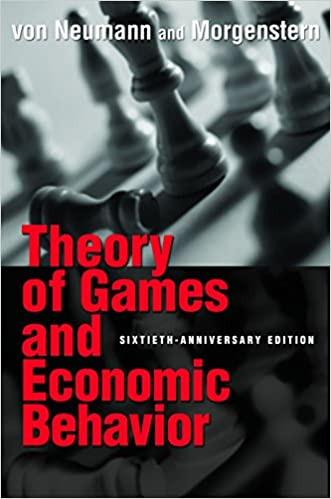
Morgenstern, Oskar, and John Von Neumann. Theory of games and economic behavior. Princeton university press, 1953.
M. A. Nowak, R. M. May. Evolutionary games and spatial chaos. Nature, vol.359, pp.826-829, 1992.
http://www.nature.com/articles/359826a0
C. Hauert, M. Doebeli. Spatial structure often inhibits the evolution of cooperation in the snowdrift game. Nature, vol.428, pp.643-646, 2004.
https://pubmed.ncbi.nlm.nih.gov/15074318/
G. Szabó, G. Fáth. Evolutionary games on graphs. Phys. Rep., vol.446, 97–216,
https://www.sciencedirect.com/science/article/abs/pii/S0370157307001810
F. C. Santos, M. D. Santos, J. M. Pacheco. Social diversity promotes the emergence of cooperation in public goods games. Nature, vol.454, pp.213-217, 2008.
http://www.nature.com/articles/nature06940
D. G. Rand, S. Arbesman, N. A.Christakis. Dynamic social networks promote cooperation in experiments with humans. Proc. Natl. Acad. Sci. USA, vol.108, pp.19193-19198, 2011.
https://www.pnas.org/content/108/48/19193/
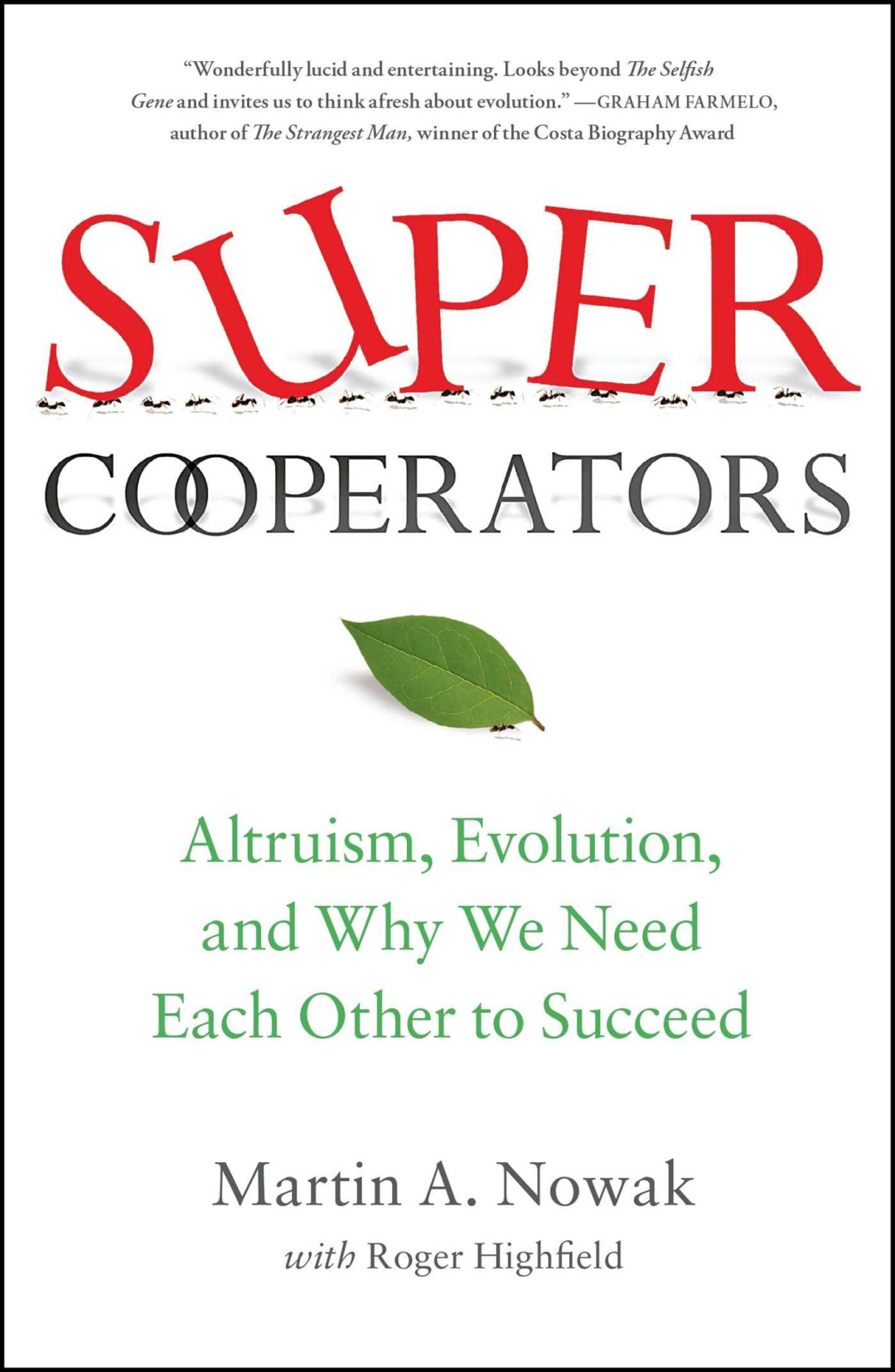
M. A. Nowak, R. Highfield. Super Cooperators: Altruism, Evolution, and Why We Need Each Other to Succeed. Free Press, 2012 (马丁·诺瓦克/罗杰·海菲尔德著, 龙志勇/魏薇译. 超级合作者. 浙江人民出版社, 2013) (该书可以作为本次课的科普书籍)
网络科学经过二十年蓬勃发展后,将进入了下一个关键的十年。在新的发展阶段,网络科学迫切需要更多数理人才的加入,为定量化地描述复杂系统的结构和动力学做出跨学科的努力。相信随着更多数学理论和工具的引入,网络科学必将能对更多的现象进行更贴合实际的建模和分析,预期会收获更丰盛的成果。
集智学园在 2021 年 2 月推出了网络科学集智课堂第二期,本期课程以《网络科学导论》教材为框架,邀请了陈关荣、项林英、樊瑛、宣琦、李翔、史定华、李聪、荣智海、周进、王琳十位网络科学专家作为导师,以网络动力学为核心,联系其与网络结构与功能的关系。从一个更加动态的视角看待和研究网络问题。
同时,我们会给学员充分发挥聪明才智、展示个人魅力并赢取奖学金的机会。鼓励学员申请领读书中的章节和相关论文,引领大家进行更深入细化的学习。
“集智课堂”的主旨就是集大家之智,涌个体之现,让每个参与者,从学员到教授都可以从这个课堂上受益。如果你对网络科学感兴趣,需要学习网络科学相关知识和技能,欢迎你加入我们!
课程目的
1. 初步构建较为完善的网络科学知识体系,为你的知识框架增加新的思维和分析工具;
3. 有意识地打造你自己的思维框架,梳理问题,提炼模型;
第一步:扫码付费
第二步:在课程详情页面,填写“学员登记表”
第三步:扫码添加助教微信,入群
https://campus.swarma.org/course/2336
https://campus.swarma.org/course/2333
点击“阅读原文”,报名直播~