20 世纪 70 年代末李天岩和 James Yorke 在数学分析中正式引入“混沌”这个科学术语。经过学术界中好几代人近 50 年的共同努力,混沌早已不再是一个陌生的概念,其科学体系日趋完善,在数学、物理、计算机科学、生命科学、社会科学、工程技术、商业和通讯等领域中得到了广泛的应用。为了向跨学科学习者普及混沌科学的理论知识,集智学园特别邀请陈关荣、王雄、李春彪、张旭、马军、刘坚、王青云、叶国栋、禹思敏9位从事混沌及相关跨学科研究的资深学者担任导师,开设了「混沌科学系列课程」。
12月23日(本周五)晚19:00-21:30,将由南京信息工程大学人工智能学院教授、博士生导师李春彪老师开启混沌科学第三课,从混沌信号的调幅、调频和调偏置出发,系统介绍一系列具有独立非分岔参数的混沌动力学系统,通过系统参数的调整实现系统输出混沌信号的调理。在此基础上,也结合第四种电路元件忆阻器的建模,重新设计混沌系统,实现基于忆阻器的混沌信号的全面调理。欢迎感兴趣的朋友关注并加入课程,共同探索混沌科学!
混沌信号的宽频和类随机特性,使得其在混沌保密通信、混沌加密以及流体搅拌等领域有着广泛的应用。在电路设计上来说,宽频混沌信号的幅度与偏置控制不能通过常规的放大电路和偏置调理电路来实现,因此需要重新设计混沌系统来达到信号调理的目的。
本讲座从混沌信号的调幅、调频和调偏置出发,系统介绍一系列具有独立非分岔参数的混沌动力学系统,通过系统参数的调整实现系统输出混沌信号的调理,具体包括混沌系统输出信号的局部调幅与全局调幅、调幅调频、偏置控制、完全控制与自由控制。在此基础上,也结合第四种电路元件忆阻器的建模,重新设计混沌系统,实现基于忆阻器的混沌信号的全面调理。
-
引言
-
混沌吸引子的几何调控
-
混沌吸引子的分布调控
-
忆阻器与忆阻混沌振荡器
-
忆阻混沌振荡器的调控设计
关键词:混沌信号、非分岔参数、幅度控制、幅频同调、偏置控制、全控系统、自由控制系统、混沌相轨、多稳态、条件对称、吸引子倍增、吸引子自繁衍、网格吸引子、吸引子生长、多稳态动力学侦测、忆阻器、忆阻混沌振荡器
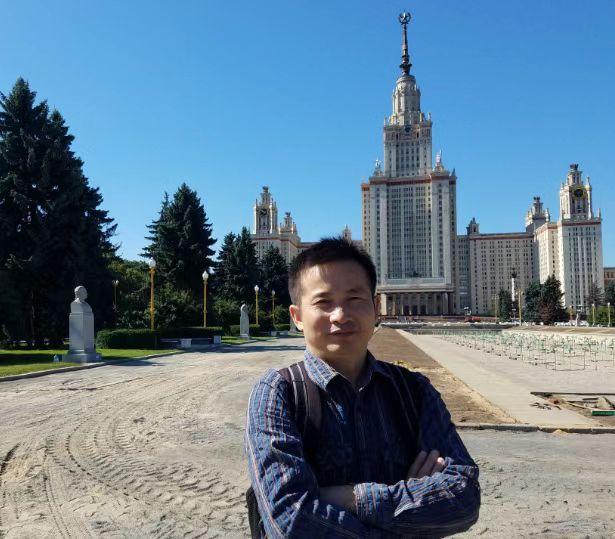
李春彪,南京信息工程大学人工智能学院教授、博士生导师。南京理工大学工学博士,东南大学博士后,美国威斯康星大学访问学者。江苏省第四期333高层次人才,物理与控制国际学会会员,“分叉与混沌”和“混沌、孤子与分形”国际学术期刊编委,中国密码学会混沌保密通信专业委员会委员,中国电子学会电路与系统分会混沌与非线性电路专业委员会委员。主要从事忆阻电路与混沌动力学及其应用研究,主持了国家自然基金、省自然基金、省“333人才”、博士后特别资助等项目,发表学术论文百余篇,2021和2020年入选爱思唯尔“中国高被引学者榜单”。他是南信大教学名师和优秀研究生导师,曾获得江苏省教育教学与研究成果三等奖、国家教学成果二等奖、江苏省教学成果一等奖和全国高校电子信息教学案例竞赛二等奖等。
https://faculty.nuist.edu.cn/lichunbiao/zh_CN/index.htm
1. Li C & Sprott J C. Amplitude control approach for chaotic signals. Nonlinear Dynamics, 2013, 73(3): 1335-1341.
2. Li C, Sprott J C & Thio W. Linearization of the Lorenz system. Physics Letters A, 2015, 379: 888-893.
3. Li C, Sprott J C, Yuan Z, et al. Constructing chaotic systems with total amplitude control. International Journal of Bifurcation and Chaos, 2015, 25(10): 1530025.
4. Li C & Sprott J C. Chaotic flows with a single nonquadratic term. Physics Letters A, 2014, 378(3): 178-183.
5. Li C & Sprott J C. Variable-boostable chaotic flows. Optik, 2016, 127(22): 10389-10398.
6. Li C, Thio W, Sprott J C, et al. Linear synchronization and circuit implementation of chaotic system with complete amplitude control. Chinese Physics B, 2017, 26(12): 120501.
7. Li C, Sprott J C, Akgul A, et al. A new chaotic oscillator with free control. Chaos, 2017, 27(8): 083101.
8. Li C & Sprott JC. Multistability in the Lorenz System: A Broken Butterfly, International Journal of Bifurcation and Chaos, 2014, 24(10): 1450131.
9. Zhang S, Li C, Zheng J, et al. Memristive autapse-coupled neuron model with external electromagnetic radiation effects. IEEE Transactions on Industrial Electronics, 2022. DOI: 10.1109/TIE.2022.3225847.
10. Gu S, He S, Wang H, et al. Analysis of three types of initial offset-boosting behavior for a new fractional-order dynamical system. Chaos, Solitons & Fractals, 2021, 143: 110613.
11. Li C, Hu W, Sprott J C, et al. Multistability in symmetric chaotic systems. The European Physical Journal Special Topics, 2015, 224(8): 1493-1506.
12. Li C, Sprott J C & Xing H. Hypogenetic chaotic jerk flows. Physics Letters A, 2016, 380: 1172-1177.
13. Li C, Sprott J C & Xing H. Constructing chaotic systems with conditional symmetry. Nonlinear Dynamics, 2017, 87(2): 1351-1358.
14. Li C, Sprott J C, Liu Y, et al. Offset boosting for breeding conditional symmetry. International Journal of Bifurcation and Chaos, 2018, 28(14): 1850163.
15. Li C, Sprott J C, Zhang X, et al. Constructing conditional symmetry in symmetric chaotic systems. Chaos, Solitons & Fractals, 2022, 155: 111723.
16. Li C, Lu T, Chen G, et al. Doubling the coexisting attractors. Chaos, 2019, 29(5): 051102.
17. Li C, Sun J, Lu T, et al. Polarity balance for attractor self-reproducing. Chaos, 2020, 30(6): 063144.
18. Li C, Sprott J C, Hu W, et al. Infinite multistability in a self-reproducing chaotic system. International Journal of Bifurcation and Chaos, 2017, 27(10): 1750160.
19. Li C, Jiang Y, Wang R, et al. Periodic offset boosting for attractor self-reproducing. Chaos, 2021, 31(11): 113108.
20. Li C, Sprott J C & Mei Y. An infinite 2-D lattice of strange attractors. Nonlinear Dynamics, 2017, 89(4): 2629-2639.
21. Li C & Sprott J C. An infinite 3-D quasiperiodic lattice of chaotic attractors. Physics Letters A, 2018, 382(8): 581-587.
22. Li C, Xu Y, Chen G, et al. Conditional symmetry: bond for attractor growing. Nonlinear Dynamics, 2019, 95(2): 1245-1256.
23. Li C & Sprott J C. Finding coexisting attractors using amplitude control. Nonlinear Dynamics, 2014, 78(3): 2059-2064.
24. Sprott J C, Wang X & Chen G. Coexistence of point, periodic and strange attractors. International Journal of Bifurcation and Chaos, 2013, 23(05): 1350093.
25. Li C, Wang X & Chen G. Diagnosing multistability by offset boosting. Nonlinear Dynamics, 2017, 90(2): 1335-1341.
26. Chua L O & Kang S M. Memristive devices and systems. Proceedings of the IEEE, 1976, 64(2): 209-223.
27. Chua L O. Memristor-the missing circuit element. IEEE Transactions on circuit theory, 1971, 18(5): 507-519.
28. Strukov D B, Snider G S, Stewart D R, et al. The missing memristor found. Nature, 2008, 453(7191): 80-83.
29. Tour J M & He T. Electronics: The fourth element. Nature, 2008, 453(7191): 42-43.
30. Itoh M & Chua L O. Memristor oscillators. International journal of bifurcation and chaos, 2008, 18(11): 3183-3206.
31. 朱雷杰,王发强. 基于 Knowm 忆阻器的新型忆感器模型的设计与分析. 物理学报, 2019, 19.
32. Chen Y C, Yu H C, Huang C Y, et al. Nonvolatile bio-memristor fabricated with egg albumen film. Scientific reports, 2015, 5(1): 1-12.
33. Sueoka B & Zhao F. Memristive synaptic device based on a natural organic material-honey for spiking neural network in biodegradable neuromorphic systems. Journal of Physics D: Applied Physics, 2022, 55(22): 225105.
34. Xu X, Zhou X, Wang T, et al. Robust DNA-Bridged Memristor for Textile Chips. Angewandte Chemie International Edition, 2020, 59(31): 12762-12768.
35. Shi C, Wang J, Sushko M L, et al. Silk flexible electronics: from Bombyx mori silk Ag nanoclusters hybrid materials to mesoscopic memristors and synaptic emulators. Advanced Functional Materials, 2019, 29(42): 1904777.
36. Xing Y, Shi C, Zhao J, et al. Mesoscopic-Functionalization of Silk Fibroin with Gold Nanoclusters Mediated by Keratin and Bioinspired Silk Synapse. Small, 2017, 13(40): 1702390.
37. Qi Y, Sun B, Fu G, et al. A nonvolatile organic resistive switching memory based on lotus leaves. Chemical Physics, 2019, 516: 168-174.
38. Yan X, Li X, Zhou Z, et al. Flexible transparent organic artificial synapse based on the tungsten/egg albumen/indium tin oxide/polyethylene terephthalate memristor. ACS applied materials & interfaces, 2019, 11(20): 18654-18661.
39. Sun B, Zhang X, Zhou G, et al. An organic nonvolatile resistive switching memory device fabricated with natural pectin from fruit peel. Organic Electronics, 2017, 42: 181-186.
40. Sun B, Zhu S, Mao S, et al. From dead leaves to sustainable organic resistive switching memory. Journal of colloid and interface science, 2018, 513: 774-778.
41. Hu L, Yang J, Wang J, et al. All-optically controlled memristor for optoelectronic neuromorphic computing. Advanced Functional Materials, 2021, 31(4): 2005582.
42. Adhikari S P, Sah M P, Kim H, et al. Three fingerprints of memristor. IEEE Transactions on Circuits and Systems I: Regular Papers, 2013, 60(11): 3008-3021.
43. Chua L O. Local activity is the origin of complexity. International journal of bifurcation and chaos, 2005, 15(11): 3435-3456.
44. Muthuswamy B & Kokate P P. Memristor-based chaotic circuits. IETE Technical Review, 2009, 26(6): 417-429.
45. Bao B, Liu Z, and Xu J, Transient chaos in smooth memristor oscillator. Chin. Phys. B, 2021,19(3 ) 030510.
46. Muthuswamy B & Chua L O. Simplest chaotic circuit. International Journal of Bifurcation and Chaos, 2010, 20(05): 1567-1580.
47. Buscarino A, Fortuna L, Frasca M, et al. Memristive chaotic circuits based on cellular nonlinear networks. International Journal of Bifurcation and Chaos, 2012, 22(03): 1250070.
48. Deng H & Wang D. Circuit simulation and physical implementation for a memristor-based Colpitts oscillator. AIP Advances, 2017, 7(3): 035118.
49. Xu B, Wang G, Wang X, et al. A third-order memristive Wien-bridge circuit and its integrable deformation. Pramana, 2019, 93(3): 1-14.
50. Sahin M E, Demirkol A S, Guler H, et al. Design of a hyperchaotic memristive circuit based on wien bridge oscillator. Computers & Electrical Engineering, 2020, 88: 106826.
51. Zhou L, Wang C & Zhou L. Generating four-wing hyperchaotic attractor and two-wing, three-wing, and four-wing chaotic attractors in 4D memristive system. International Journal of Bifurcation and Chaos, 2017, 27(02): 1750027.
52. Jiang Y, Li C, Liu Z, et al. Simplified memristive Lorenz oscillator. IEEE Transactions on Circuits and Systems II: Express Briefs, 2022, 69(7): 3344-3348.
53. Li C, Wang R, Ma X, et al. A class of offset boostable 3-D memristive system. International Conference on Neuromorphic Computing (ICNC). IEEE, 2021: 53-60.
54. Kengne J, Leutcho G D & Telem A N K. Reversals of period doubling, coexisting multiple attractors, and offset boosting in a novel memristive diode bridge-based hyperjerk circuit. Analog Integrated Circuits and Signal Processing, 2019, 101(3): 379-399.
55. Zhang X, Li C, Chen Y, et al. A memristive chaotic oscillator with controllable amplitude and frequency. Chaos, Solitons & Fractals, 2020, 139: 110000.
56. Zhang X, Li C, Dong E, et al. A Conservative Memristive System with Amplitude Control and Offset Boosting. International Journal of Bifurcation and Chaos, 2022, 32(04): 2250057.
57. Du C, Liu L, Zhang Z, et al. A mem-element Wien-Bridge circuit with amplitude modulation and three kinds of offset boosting. Chaos, Solitons & Fractals, 2022, 165: 112832.
58. Zhang X, Li C, Min F, et al. Broken symmetry in a memristive chaotic oscillator. IEEE Access, 2020, 8: 69222-69229.
59. Gu Z, Li C, Pei X, et al. A conditional symmetric memristive system with amplitude and frequency control. The European Physical Journal Special Topics, 2020, 229(6): 1007-1019.
60. Wang R, Li C, Kong S, et al. A 3D memristive chaotic system with conditional symmetry[J]. Chaos, Solitons & Fractals, 2022, 158: 111992.
61. Li C, Wang R, Ma X, et al. Embedding any desired number of coexisting attractors in memristive system. Chinese Physics B, 2021, 30(12): 120511.
62. Sun J, Li C, Lu T, et al. A memristive chaotic system with hyper-multistability and its application in image encryption. IEEE Access, 2020, 8: 139289-139298.
63. Chen C & Min F. ReLU-type memristor-based Hopfield neural network. The European Physical Journal Special Topics, 2022, 231(16): 2979-2992.
64. Zhang S, Zheng J, Wang X, et al. Initial offset boosting coexisting attractors in memristive multi-double-scroll Hopfield neural network. Nonlinear Dynamics, 2020, 102(4): 2821-2841.
65. Gu J, Li C, Lei T, et al. A memristive chaotic system with flexible attractor growing. The European Physical Journal Special Topics, 2021, 230(7): 1695-1708.
19:00-21:00 李春彪:混沌吸引子调控与忆阻混沌振荡器设计
直播方式:
21世纪是复杂性的世纪,理解混沌是探索复杂性的关键环节。在科学、工程中,混沌与非线性方法已经成为研究动态系统的主要手段,加深了对气候、生态、大脑、流行病等诸多复杂系统问题的理解,并在湍流、加密、数据分析以及生命科学中有广泛应用。在社会、商业领域,混沌理论在通讯、交通、金融市场、疾病与信息传播等问题中亦有诸多启发和应用。随着混沌现象的进一步系统研究和广泛应用,它正在从一套理论发展为一门科学。
为了向跨学科学习者普及混沌科学的理论本质,从而能将混沌科学应用到自己的研究、探索中,帮助大家分析、理解、认知其中的复杂性,集智学园特别策划混沌科学系列课程,导师团队由著名混沌理论学者、香港城市大学讲席教授、欧洲科学院院士陈关荣领衔,联合王雄、李春彪、张旭、马军、刘坚、王青云、叶国栋、禹思敏等国内的混沌理论研究专家及相关跨学科研究的资深学者,开出了 “混沌科学”系列科普课程 。欢迎你的加入。
本课程面向数学、力学、机械、电子、信息安全和脑科学等专业的大学生、研究生、博士生以及相关的从业者,希望了解混沌理论、并进行跨学科应用的同学。
目前早鸟价899,截止到2022年12月31日前有效。到期后恢复原价999元
扫码付费报名课程,也可仅购买感兴趣的单节课程
课程链接:https://campus.swarma.org/course/4901?from=wechat
-
扫描二维码,支付宝与微信支付均可付费;
-
付费后,请在课程详情页面,扫码二维码填写“学员登记表”;
-
填表结束后,会弹出课程助教微信二维码,添加助教微信,即可加入课程交流群,与老师同学互动。
本课程可开发票。
往期回顾
1. 陈关荣:混沌科学的历史与故事丨第一课
课程回放链接:https://campus.swarma.org/course/4901?from=wechat
课程回放链接:https://campus.swarma.org/course/4904?from=wechat
推荐阅读
-
希望理查森能够知道,他生前的梦想成真了丨陈关荣
-
蝴蝶效应和混沌故事 | 陈关荣
-
混沌数学理论从她笔下悄悄流出丨陈关荣
-
离散混沌传奇丨陈关荣
-
这门复杂性科学有个别致的名称——混沌丨陈关荣
-
《微分方程教程》-高等教育出版社出版,作者:B.B.史捷班诺夫,卜元震
-
《非线性系统》-电子工业出版社,作者:Hassan K.Khali
-
《Chaotic Systems with Multistability and Hidden Attractors》-出版社:Springer Berlin Heidelberg,作者:Xiong Wang, Nikolay V.Kuznetsov, Guanrong Chen.
-
《电路与系统中的混沌》World Scientific出版社,作者:陈关荣
-
《混沌动力学基础及其应用》-高等教育出版社,作者:刘宗华
-
《电子电路与系统基础》-清华大学出版社,作者:李国林。
-
Muthuswamy, B , Chua, LO. SIMPLEST CHAOTIC CIRCUIT. INTERNATIONAL JOURNAL OF BIFURCATION AND CHAOS, 20(5), 1567-1580. Doi: 10.1142/S0218127410027076
-
Itoh, M, Chua, LO. MEMRISTOR OSCILLATORS. INTERNATIONAL JOURNAL OF BIFURCATION AND CHAOS, 18(11), 3183-3206 Doi: 10.1142/S0218127408022354.
-
Chua, LO. Memristor-The Missing circuit element. IEEE Transactions on circuit theory. CT-18(5), 507-519.
-
Steven Strogatz 在康奈尔大学《非线性动力学与混沌》课程:https://campus.swarma.org/course/697